
What to Do if a Scammer Keeps Asking for More Money
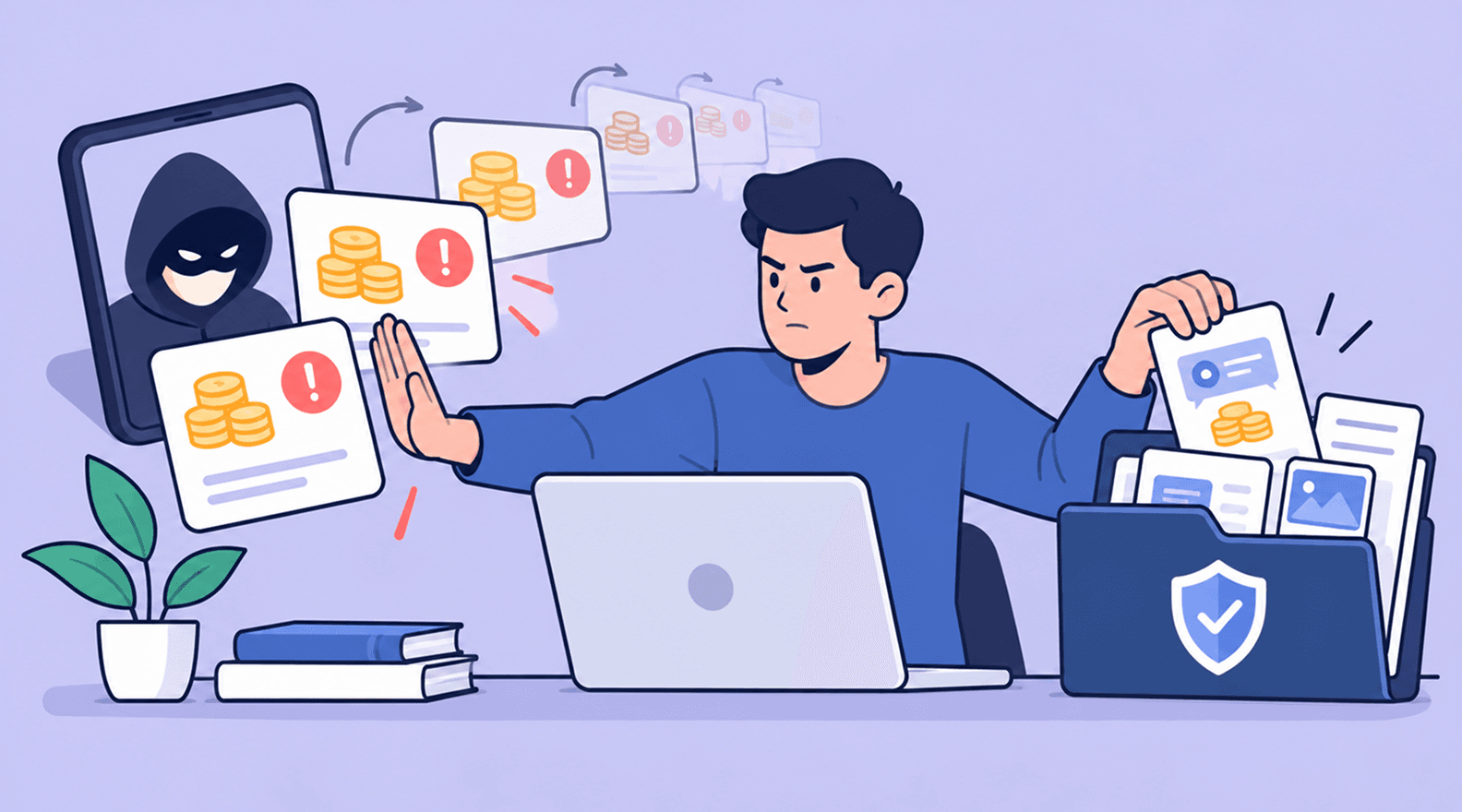
Learn what to do if a scammer keeps demanding more payments for taxes, verification, release fees, or account upgrades after you have already sent money.
A repeated demand for money is one of the clearest escalation patterns in many online scam cases. After the first payment is made, the story changes. A new fee appears. A new obstacle is introduced. The user is told that one final payment will unlock access, clear a problem, or release what is supposedly already theirs.
This cycle can continue far longer than people expect.
Why more payment demands happen
Once someone has already paid, the scammer knows that hope and urgency are both active. The person may believe they are close to solving the issue. That is exactly why the next request is framed as temporary, procedural, or unavoidable.
The names vary, but the method is familiar.
Common explanations people are given
The added payment may be described as:
- a release fee
- a tax prepayment
- an account activation charge
- a verification deposit
- a compliance payment
- a security or insurance fee
Different wording, same pattern: pay again to gain access to something you were already told existed.
First, pause the momentum
The most useful first step is not technical. It is psychological. Stop the pace of the conversation. Repeated scam demands are often designed to feel urgent and final. Creating distance makes the pattern easier to see.
Then preserve the request itself
Treat the new demand as evidence. Save the message, date, amount, explanation, and payment destination. If a threat or promise was attached to the request, save that too.
This matters because repeated requests often reveal contradictions over time.
Compare it to what you were told before
One useful exercise is to place the new demand next to earlier promises. Were withdrawals supposed to be easy? Were taxes supposedly already handled? Was verification claimed to be complete before? The inconsistency itself can become an important part of the case record.
Why people keep paying
It is worth saying clearly that repeated payments are not unusual in scam cases. They reflect manipulation, pressure, hope, and sunk-cost thinking. Scam operations rely on exactly that emotional progression.
Where a structured file helps
These cases often produce a messy combination of chats, payment confirmations, screenshots, dashboard images, and fake notices. A structured report can help place each demand into a timeline with the supporting exhibits connected to it.
Final thoughts
If a scammer keeps asking for more money, the most important thing is to preserve the pattern. One payment request may look isolated. A documented chain of escalating demands tells a much clearer story.